









What to Pack for an African Safari: The Ultimate Packing List
Planning an African safari with kids and wondering what to pack? From comfortable safari clothing and sturdy shoes to sunscreen, insect repellent, and camera equipment, knowing what to bring can make preparing for your trip much easier.
When we travelled to Tanzania in July 2022, we spent one week on safari followed by a week in Zanzibar. Packing for both parts of our family holiday took a little planning, especially with two children and different clothes and essentials to organize.
We kept things practical: comfortable pants, basic T-shirts, warm layers for chilly mornings, and packing cubes to keep everyone’s belongings organized. We also learned that you don’t need an expensive camera to capture wonderful safari memories. And if you’re traveling with kids, a little flexibility can go a long way!
In this guide, I’m sharing our African safari packing list, based on our own family trip to Tanzania. You’ll discover what to wear, which shoes to bring, what to pack for the kids, and how to organize your luggage for a safari and beach holiday combination.
Disclosure: This post may contain affiliate links. If you book or buy through them, I earn a small commission at no extra cost to you. I only recommend things we've actually used and loved. Thank you for supporting Travel-icious!
African Safari Packing List: The Essentials
Before we get into the details, here’s a quick overview of what to pack for an African safari:
- Comfortable pants and T-shirts
- A warm sweater or fleece for chilly mornings and evenings
- Comfortable shoes that can get dusty
- A lightweight rain jacket, depending on the season
- Sunscreen, sunglasses, and a sun hat
- Insect repellent
- Personal medication and toiletries
- A smartphone or camera and power banks
- A daypack for game drives
- Snacks and entertainment for the kids
- Packing cubes to keep your luggage organized
- Travel documents and insurance details
Your exact packing list will depend on the time of year, your itinerary, and whether you’re combining your safari with a beach holiday. Here’s what we learned from our own experience.
1. What to Wear on an African Safari
You don’t need an entirely new wardrobe for an African safari. Comfortable clothes that you don’t mind getting dusty are the most important thing.
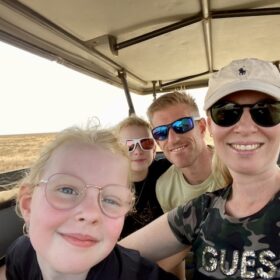
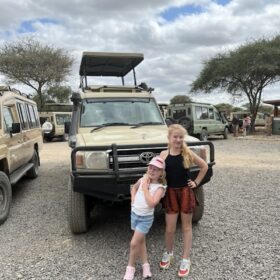
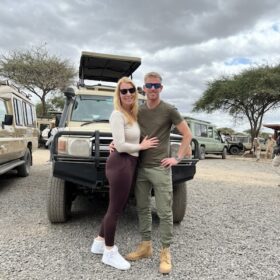
For our Tanzania safari, we kept things simple. We all wore comfortable pants in camouflage green or brown, paired with basic T-shirts in black, beige, and green. We packed both short-sleeved and long-sleeved shirts, which gave us enough flexibility throughout the day.
Nothing fancy, nothing complicated. Just comfortable clothes that worked well for long game drives.
Pack Layers for Cold Mornings
We travelled to Tanzania in July, during the cooler dry season. Although daytime temperatures were often comfortable enough for T-shirts, early mornings and evenings could be surprisingly chilly.
We each brought a sweater or fleece, and we wore them throughout the first week in Tanzania. Once we arrived in Zanzibar, those warm layers stayed in our suitcase. We certainly didn’t need them on the beach!
If you’re traveling during the cooler months, don’t underestimate how cold it can feel when you’re heading out early in a safari vehicle.
My advice is to dress in layers. Start with a T-shirt and add a sweater or fleece when necessary. A lightweight jacket can also be useful, depending on the weather and your planned activities.
Do You Need Special Safari Clothes?
Not necessarily. We didn’t invest in a complete safari wardrobe, and our comfortable pants and basic T-shirts worked perfectly well.
Neutral colours such as beige, brown, green, and khaki are popular for safari clothing. They’re practical in dusty environments and help you blend into the surroundings.
You don’t need to buy everything in these colours, though. Focus on comfortable clothes that are suitable for the weather and activities on your itinerary.
I’d also recommend bringing a lightweight rain jacket, depending on the season and region you’re visiting.
My tip: Pack a few comfortable outfits that you can mix and match. You’ll probably spend much of your time sitting in the safari vehicle, so comfort matters more than looking as though you’ve just stepped out of a safari catalogue.
For more information about choosing the right time for your trip, read Best Time to Visit Tanzania for a Safari.
How Much Clothing Do You Really Need?
One thing we learned during our Tanzania trip is that you don’t necessarily need to pack enough clothes for every single day of your holiday.
For the safari, I packed two pairs of long pants, two pairs of shorts, and a clean T-shirt for each day. Looking back, that really wasn’t excessive, especially because we combined our safari with a week in Zanzibar.
We also did laundry during our trip. With Evelijn occasionally throwing up, having the option to wash clothes was particularly useful!
And honestly, I wish I’d known beforehand how easy, quick, and inexpensive it would be. I probably would have packed less.
Of course, laundry availability and prices depend on your accommodations and itinerary, so it’s worth checking in advance.
My tip: Before packing enough clothes for every day, find out whether your accommodations offer laundry services. If washing clothes is easy and affordable, you may be able to travel with a smaller wardrobe than you think.
2. What Shoes Should You Wear on Safari?
Shoes are another area where you don’t need to overcomplicate things.
For our two-week Tanzania and Zanzibar trip, we each packed three pairs of shoes:
- Safari shoes: A pair of shoes for Tanzania that we didn’t mind getting dirty.
- Sneakers: For everyday use and when we wanted something different from our safari shoes.
- Sandals or flip-flops: Perfect for Zanzibar, where our days were much more relaxed.
This worked well for us because the safari and beach portions of our trip called for different footwear.
During the safari, we wanted comfortable shoes that could handle dust and outdoor activities. We didn’t need to worry about keeping them pristine. On Zanzibar, sandals and flip-flops were much more practical for relaxing by the beach.
Do you need hiking boots? That depends on your itinerary. If you’re planning walking safaris or longer hikes, suitable walking shoes may be essential. For a trip that mainly involves game drives, comfortable closed-toe shoes may be sufficient.
Check the requirements of your safari operator before deciding what to bring.
Our tip: Choose footwear that is comfortable, already broken in, and suitable for the activities you’ve planned. You don’t want to discover that your new shoes give you blisters halfway through your holiday.
3. Sun Protection: Don’t Forget the Essentials
Even when the morning starts cool, the African sun can be strong. Sun protection should be part of your everyday safari routine.
Make sure you pack:
- Sunscreen with an appropriate SPF
- Sunglasses
- A sun hat or cap
- Lip balm with SPF
- Lightweight clothing that provides some protection from the sun
When traveling with children, it’s particularly helpful to keep sunscreen somewhere accessible rather than buried at the bottom of a suitcase.
We carried sunscreen in our daypacks so we could reach it easily during the day.
Remember that sun protection is important even when the temperature doesn’t feel particularly high. Reapply sunscreen as directed on the packaging, especially after sweating or swimming.
4. Insect Repellent, Medication, and Toiletries
Mosquito protection was an important part of our Tanzania packing list.
We bought insect repellent containing DEET and took malaria prevention tablets throughout our trip, following the medical advice we had received before traveling.
We also found mosquito protection at the accommodations along the way. Mosquito spray was available, and there were mosquito nets over the beds. In Zanzibar, they even sprayed for mosquitoes around the accommodation.
That was helpful, but I wouldn’t rely on your accommodation to provide everything you need. Bring suitable insect repellent and speak to a travel health professional before your trip about malaria prevention, vaccinations, and any other medication you may need.
For more practical information about preparing for Tanzania, read Travel Tips for Tanzania: Visa, Money, Vaccinations & Safety.
Keep Your Toiletries Organized
We brought two hanging toiletry bags, which were really practical. We could hang them up in our accommodation and keep our everyday essentials together instead of spreading everything across the bathroom.
And, of course, I brought a little makeup bag of my own.
Because let’s be honest: even on safari, we want to look good! Just because you’re spending your days looking for lions doesn’t mean you have to give up your usual beauty routine.
A hanging toiletry bag is particularly useful when you’re moving between accommodations. You can hang it up when you arrive and pack it away again when it’s time to leave.
If you’re looking for a practical option, take a look at our Hanging Travel Makeup Bag – Four-Layer Organizer.
Other toiletries and essentials to consider include:
- Toothbrushes and toothpaste
- Shampoo and conditioner
- Shower gel
- Deodorant
- Moisturizer
- Hand sanitizer
- Wet wipes
- Personal medication
- Any prescription medication you need
You don’t need to bring every product you use at home. Think about what you’ll genuinely need and how much space you have available.
5. Camera or Smartphone?
We didn’t bring a professional camera on our Tanzania safari. We took all our photos with our iPhones, and we came home with some truly beautiful pictures. Even the girls took photos with their own phones, capturing the animals they spotted during our game drives.
Were all the pictures perfect? No. Not every animal in the distance was easy to photograph, and smartphone cameras have their limitations.
But we captured so many wonderful moments, and we were genuinely happy with the results. To be honest, I’m not even sure we would have known how to get the best out of a professional camera!
A telephoto lens can be useful when animals are far away, but expensive equipment doesn’t automatically make you a better photographer. Especially when you’re trying to photograph a moving animal while keeping an eye on what else is happening around you.
Don’t Forget Your Power Banks
We brought multiple power banks on our trip, which was useful because we relied heavily on our phones.
Between taking photos, using our phones throughout the day, and keeping everything charged, having extra power was important.
If you’re looking for an extra power source for your travels, you can find the 20,000mAh Portable Power Bank – 20W Fast Charging in our webshop.
Remember to pack the appropriate charging cables and check whether you’ll need a travel adapter for your destinations. If your itinerary includes remote camps or smaller lodges, ask your accommodation or safari operator about charging facilities before you leave.
My advice? Don’t feel you need to buy expensive camera equipment just for a safari. Use the phone you already have, capture those incredible moments, and enjoy the experience.
And if your children want to take their own pictures, let them! It’s lovely to see the safari through their eyes, too.
6. Safari Packing List for Kids
Traveling on safari with children requires a little extra thought. You need to consider what they’ll wear, what they’ll eat, and how they’ll stay comfortable during longer game drives.
The good news is that you don’t need to pack the entire house.
Snacks and Food for the Kids
One thing we appreciated during our Tanzania safari was our guide, Valance. He was knowledgeable, funny, and great with the children. He also understood that traveling with kids sometimes requires a little flexibility.
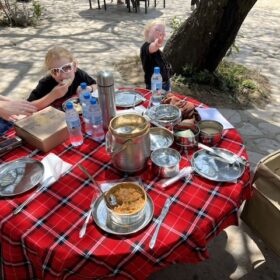
Valence arranged our picnic lunches during the safari, which usually consisted of chicken, rice, and vegetables.
He also noticed that Evelijn was a picky eater at breakfast. She preferred things like pancakes, bread rolls, and sometimes waffles. Once he realized this, he made sure there were extra options for her in the lunch arrangements.
That was such a thoughtful touch and made our days much easier.
We also packed snacks in our daypacks because having something familiar to eat can be helpful when you’re traveling with children.
Your own arrangements may be different, so ask your safari operator what meals and snacks are provided and whether there are options for children with particular dietary needs.
Bring Something for Longer Drives
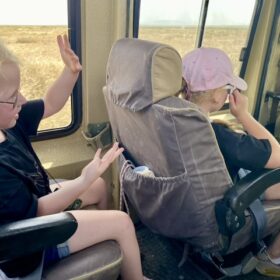
We also brought the girls’ iPads. At first, we’d convinced them that there was no internet during our safari, which worked surprisingly well for about half the week.
Until they figured out that we actually did have internet. Oops!
We kept screen time within limits, though. The girls were encouraged to enjoy the game drives and look out for animals. Toward the end of the day, when we were heading to our next stop, they were allowed some iPad time.
You know your own children best. Some kids are perfectly happy spotting animals for hours, while others appreciate a little entertainment during longer stretches between destinations.
Depending on your family, you might want to pack:
- A tablet with downloaded movies or games
- Headphones
- A small activity book
- A few familiar snacks
- A refillable water bottle, if appropriate for your itinerary
You don’t need to plan entertainment for every minute. The animals will provide plenty of excitement, but a little flexibility can make long days easier for everyone.
If you’re wondering whether a safari is suitable for your family, have a look at Safari with Kids: Is Tanzania a Family-Friendly Destination?.
7. What to Pack in Your Safari Day Bag
During our Tanzania safari, we each had our own backpack in the safari vehicle. We packed our phones, snacks, sunscreen, insect repellent, and the kids’ iPads.
Having everything within reach was useful during the long game drives.
Water wasn’t something we needed to worry about packing ourselves. Valance took care of that for us, so we had drinking water available during the safari.
And then there were the phones. We packed them in our backpacks, but they didn’t stay there for very long. We seemed to have them in our hands most of the time, ready to take pictures whenever an animal appeared. After all, you don’t want to miss a great photo opportunity because your phone is buried at the bottom of your bag!
What Should Go in Your Daypack?
Your exact packing list will depend on your safari arrangements, but these are useful things to consider:
- Phone and camera equipment
- Sunscreen
- Insect repellent
- Snacks for the children
- Drinking water, unless your operator provides it
- A lightweight sweater or fleece
- Binoculars, if you have them
- Any essential medication
We each carried our own backpack, but you don’t need anything particularly large. A comfortable bag with enough room for your essentials is usually sufficient.
If you need a bag that can also work for other outdoor activities, take a look at our 35L Roll-Top Dry Bag Backpack. However, check the luggage recommendations of your safari operator before choosing a large daypack, as space in a safari vehicle may be limited.
Our tip: Keep the things you’ll use most often near the top of your bag. When an animal suddenly appears, you don’t want to spend five minutes searching for your phone or sunscreen!
8. How to Organize Your Safari Luggage with Packing Cubes
This was one of the things we got right when packing for our Tanzania and Zanzibar trip.
We packed one suitcase for the safari and another for Zanzibar. That meant we didn’t have to unpack and repack everything every time we moved to a new accommodation.
During the safari, we simply took out the packing cubes we needed and left the rest of our luggage organized in the suitcase. Because we weren’t staying in one place for very long, this made moving between accommodations much easier.
Everyone Had Their Own Colour
We also used packing cubes, and everyone had their own colour.
Anneloes had black packing cubes, Evelijn had blue ones, mine were red, and Pim’s were black with red zippers.
With four people traveling together, this made it easy to recognize whose clothes were whose without opening every single cube. No guessing which pile of clothes belonged to whom!
We use Three-Piece Compression Packing Cubes to keep our luggage organized and make better use of the available space.
If you’d like to know more about how we use them on our family trips, I’ve also written about The Compression Packing Cubes We Never Travel Without (And Why You Shouldn’t Either).
Why We Packed Two Separate Suitcases
Packing a separate suitcase for the safari and another for Zanzibar was particularly practical.
We could focus on the clothes and essentials we needed for the safari without constantly digging through our beachwear. When we reached Zanzibar, we could switch to the other suitcase instead.
It was a simple system, but it worked well for us.
My tip: If you’re combining a safari with a beach holiday, consider packing the two parts of your trip separately. Combine that with packing cubes for each family member, and you’ll have a much easier time keeping everything organized.
Check Your Safari Luggage Allowance
If your safari includes domestic flights between destinations, check the luggage requirements before packing. Some small aircraft have strict limits on baggage weight, size, and the type of bag you can bring.
A hard-shell suitcase may not be suitable for every flight, and the allowance can vary by airline and itinerary. Confirm the rules with your safari operator rather than assuming that your usual checked luggage will be accepted.
Even if you’re traveling entirely by road, it’s worth asking how much luggage will fit comfortably in your safari vehicle.
9. Packing for a Safari and Zanzibar Combination
Combining a safari with Zanzibar is a wonderful way to experience two very different sides of Tanzania. You can spend your first week exploring national parks and spotting wildlife before finishing your trip with some well-deserved beach time.
That’s exactly what we did.
The key to packing for both is to think about what you’ll need in each location rather than packing as though you’re taking two completely separate holidays.
What You’ll Need for the Safari
For the safari portion, focus on:
- Comfortable pants and T-shirts
- A warm sweater or fleece
- Shoes that can get dusty
- Sunscreen and insect repellent
- Your toiletries and medication
- A daypack for game drives
As we discovered, those warm layers were useful during our first week in Tanzania.
What You’ll Need for Zanzibar
For Zanzibar, you’ll want to pack:
- Swimwear
- Lightweight summer clothing
- Sandals or flip-flops
- Beachwear
- Sun protection
- Any personal essentials for your stay
We didn’t need our sweaters once we arrived in Zanzibar, so keeping the safari and beach clothing separate worked particularly well.
If you’re planning a similar trip, you can find more inspiration in Zanzibar: The Ultimate Family Travel Guide and Enjoy Bounty Island Zanzibar.
For help putting the two parts together, have a look at Tanzania Itinerary: 14 Days of Safari and Zanzibar with Kids.
Our tip: Don’t pack twice as much clothing just because you’re visiting two different destinations. Choose versatile pieces, use packing cubes, and keep your luggage organized so you can find what you need without unpacking everything.
10. What You Don’t Need to Buy for an African Safari
It’s easy to assume that an African safari requires lots of specialist equipment. The reality is that you may already own many of the things you’ll need.
Based on our own experience, there are a few things you don’t necessarily need to buy.
An expensive safari wardrobe: We wore comfortable pants and basic T-shirts in neutral colours. We didn’t need a completely new set of specialist clothing.
A professional camera: We used our iPhones and still came home with beautiful photographs. A camera with a telephoto lens can be useful, but it isn’t essential for everyone.
Too many outfits: We packed a reasonable number of clothes and did laundry during our trip. Knowing that washing clothes was easy and inexpensive would probably have encouraged me to pack less.
Lots of separate bags for every activity: We each had a backpack for our essentials, but you don’t need to fill your luggage with specialist bags. Choose what suits your itinerary and the space available.
Of course, your needs will depend on the type of safari you’re taking. Walking safaris, camping trips, and remote expeditions may require additional specialist equipment. Always check your operator’s recommendations before leaving.
The aim isn’t to buy as little as possible at all costs. It’s to pack what you’ll actually use rather than spending money on things you don’t need.
11. Your African Safari Packing Checklist
Ready to start packing? Use this checklist to make sure you haven’t forgotten the essentials.
Clothing
- Comfortable pants
- Short-sleeved T-shirts
- Long-sleeved T-shirts
- Sweater or fleece
- Lightweight rain jacket, depending on the season
- Underwear and socks
- Sleepwear
- Swimwear if combining your safari with a beach holiday
Shoes
- Comfortable shoes for safari
- Sneakers or another everyday pair
- Sandals or flip-flops for Zanzibar or other beach destinations
Sun and Insect Protection
- Sunscreen
- Sunglasses
- Sun hat or cap
- Lip balm with SPF
- Insect repellent
- Any prescribed malaria prevention medication recommended by your travel health professional
Toiletries and Medication
- Toothbrushes and toothpaste
- Shampoo and conditioner
- Shower gel
- Deodorant
- Moisturizer
- Makeup and personal care products
- Hand sanitizer and wet wipes
- Personal medication
- Hanging toiletry bag
Electronics
- Smartphone or camera
- Charging cables
- Power banks
- Travel adapter, if needed
- Headphones
- Tablet or iPad for the children, if needed
Safari Day Bag
- Comfortable backpack
- Snacks
- Sunscreen
- Insect repellent
- Drinking water, unless provided by your operator
- Phone and other electronics
- Binoculars, if desired
- Lightweight sweater or fleece
Organization and Travel Documents
- Packing cubes
- Separate luggage for safari and beach holiday, if practical
- Passports
- Any required visas or travel authorizations
- Travel insurance details
- Copies of important travel documents
- Check luggage allowances for any domestic flights
- Check whether laundry is available at your accommodations
Don’t Forget Your Free Packing List
If you love having a checklist to work through before a trip, you can also explore our free packing lists.
At Travelicious, we’ve created practical packing lists to help families prepare for different types of holidays, so you don’t have to start from scratch every time you travel.
Download your FREE Travelicious Packing List and make getting ready for your next family adventure a little easier.
Ready to Plan Your Tanzania Safari?
Packing is just one part of preparing for an African safari. Choosing the right route, deciding when to travel, finding suitable accommodations, and planning activities that work for the whole family all take time.
If you’re still putting your trip together, start with Tanzania Itinerary: 14 Days of Safari and Zanzibar with Kids. You can also read Serengeti National Park: Everything You Need to Know Before You Go, discover Best Time to Visit Tanzania for a Safari, and find out How Much Does a Tanzania Safari Cost?.
And if you’d rather have some help putting all the pieces together, that’s where my Let Me Plan Your Trip service comes in.
Tell me where you’d like to go, when you’re traveling, who’s coming along, your budget, and what your family enjoys. I’ll create a personalized seven-day itinerary with accommodation and activity suggestions, practical advice, and one revision so we can fine-tune the plan.
You can find out more about Let Me Plan Your Trip and let Travelicious help take some of the planning off your hands.
Because the best family adventures don’t have to start with hours of research and a spreadsheet that makes your head spin. Sometimes, a little help is all you need to get going.
Read our EVERYTHING YOU WANT TO for more tips and inspiration.
About the Author

Author / Founder of Travel-icious.com
Family travel blogger with 10+ years of experience. Travelling with kids across the globe.