
The practical side of travelling through Japan with children – from bullet trains and luggage forwarding to food, accommodation, packing, costs and all those little things we wish we’d known before we went.
There is something slightly strange about planning a trip to Japan.
Before you go, it can feel enormous.
The language is different. The cities are huge. There are trains going in every possible direction, tiny restaurants tucked away down side streets, vending machines absolutely everywhere and enough things to see and do to fill several holidays.
And then you arrive.
Within a few days, something changes.
You start understanding the train system. You know which platform you need. You learn that the little machine at the station is actually much easier to use than it looks. You discover that a convenience store can solve almost any problem involving a hungry child.
And suddenly Japan doesn’t feel complicated anymore.
It feels easy.
Actually, more than easy. It starts to feel incredibly well organised.
This is the third and final part of our Japan with Kids guide, and this is the part where we get practical. We’ve already talked about where to go and how to build your itinerary, but there are a few things that can make a huge difference once you’re actually travelling around Japan with children.
So let’s talk trains, hotels, food, money, packing and everything in between.
Getting Around Japan with Kids
If there is one thing Japan absolutely excels at, it is transportation.
The first time you use the Japanese train system, you might stand there staring at the signs thinking, Where on earth do we go?
We know that feeling.
But don’t let the size of the system put you off. Once you’ve figured out the basics, travelling by train becomes one of the most enjoyable parts of the trip.
The trains are clean. They’re comfortable. They’re incredibly punctual. And travelling between cities becomes an experience rather than simply a way of getting from A to B.
The Shinkansen: the train your kids will remember
For many children, the Shinkansen is an attraction in itself.
And honestly, we understand why.
There is something exciting about standing on the platform waiting for that sleek bullet train to arrive. Then, almost before you’ve had time to take a photo, you’re on board and watching the Japanese countryside disappear outside the window.
Some Shinkansen trains can travel at speeds of up to 320 km/h, yet sitting inside feels surprisingly calm.
There’s plenty of space, the trains are wonderfully clean and departures are famously punctual.
And don’t underestimate the excitement of simply watching the train arrive.
We recommend getting to the platform around 15–20 minutes before departure. With kids, this gives you enough time to find the right platform without rushing, but it also gives everyone a chance to watch the whole Japanese train routine unfold.
The cleaning crew moving through the carriage with incredible speed.
The train arriving exactly when expected.
The doors opening.
Everyone boarding in an organised, almost choreographed way.
It sounds like a small thing, but these are often the moments children remember.
Travelicious Tip
If you’re travelling with kids, try to make the train journeys part of the adventure rather than something you need to get through.
Buy a few snacks, grab drinks before boarding and let them watch the scenery. Some journeys will pass surprisingly quickly.
Do You Really Need a JR Pass?
This is one of those Japan questions you’ll see everywhere when planning your trip.
And the answer today is very different from what it used to be.
A few years ago, the JR Pass was almost an automatic recommendation for international visitors travelling around Japan.
But prices have increased considerably, which means you really need to do the maths before buying one.
If you’re following a three-week itinerary, don’t simply assume the pass will be cheaper.
Add up the journeys you’re actually planning to make and compare the total with the cost of individual tickets.
Sometimes the individual tickets work out better.
And there is something quite satisfying about knowing you’ve actually done the maths rather than buying the pass simply because every Japan travel guide tells you to.
Your New Best Friend: the IC Card
There is another little piece of Japan travel magic that you’ll probably start relying on almost immediately: the IC card.
Depending on where you’re travelling, you’ll come across cards such as Suica, Pasmo or ICOCA.
Essentially, they’re rechargeable transport cards that allow you to tap in and out of trains, metros and buses instead of buying an individual ticket every time.
And with children, anything that reduces unnecessary hassle is a win.
You can also use them for purchases at many convenience stores and vending machines, which makes them even more useful.
Once you’ve got one, you’ll wonder how you ever travelled without it.
The Japanese Travel Hack We Wish Everyone Knew About
Now for one of our favourite discoveries.
Luggage forwarding.
If you’ve ever travelled through several cities with children, you’ll know exactly why this is brilliant.
Imagine checking out of your hotel in Kyoto with two large suitcases, backpacks, shopping bags and children who have suddenly decided they’re too tired to carry anything.
Now imagine leaving those suitcases at the hotel and travelling to your next destination with nothing more than a small overnight bag.
That’s luggage forwarding.
Your larger bags can be collected from one hotel and delivered to your next accommodation while you travel without them.
And in Japan, this isn’t some unusual luxury service. It’s a normal and surprisingly affordable way to travel.
For families moving around every few days, it can make a huge difference.
It means you aren’t dragging suitcases through enormous stations, trying to find lifts while simultaneously keeping an eye on the children.
Pack an overnight bag.
Send the big luggage ahead.
Get on the train.
Honestly, why don’t more countries make this so easy?
Where to Stay in Japan with Kids
Japan has accommodation for almost every budget, but there is one thing we’d prioritise over almost everything else:
Location.
Especially when you’re travelling with children.
A hotel that looks slightly cheaper on a map can quickly become a lot less attractive when you’re spending an extra hour travelling across a city every day.
Staying near a major train or metro station can save an enormous amount of time over a three-week holiday.
And after a full day of sightseeing, your feet will thank you too.
Hotels
Hotels are probably the easiest option for most families.
Japanese hotel rooms can be compact, especially compared with what you may be used to in other countries, but they’re generally incredibly efficient and spotless.
When booking, look carefully at the room configuration rather than simply the number of people the hotel says it sleeps.
Family rooms are worth looking for, particularly if you’re travelling with younger children.
Travelicious Tip: When searching for accommodation, always check the hotel’s location relative to the nearest station. A slightly smaller room in a brilliant location can be far more convenient than a larger room miles away from everything, use this link https://booking.tpk.lu/fXErmS1n for family friendly accomodations.
Apartments: A Great Option for Longer Stays
If you’re staying several nights in one city, an apartment can make life considerably easier.
Having a little more space after spending the day exploring is lovely, especially when everyone needs a break.
You may also have:
- More living space
- A washing machine
- A kitchenette
- Separate bedrooms
That washing machine can be particularly useful when you’re travelling for three weeks.
And if you’ve got younger children, having somewhere to prepare a simple breakfast or snack can make mornings much easier.
Don’t Skip the Ryokan Experience
If there is one type of accommodation we’d encourage you to experience at least once, it’s a ryokan.
A ryokan is a traditional Japanese inn, and staying in one feels completely different from staying in a standard hotel.
You sleep on futons.
You may wear a yukata.
Dinner can be an experience in itself, with beautifully presented Japanese dishes arriving one after another.
And many ryokan have an onsen where you can relax after a long day of exploring.
It may feel slightly outside your comfort zone at first, especially if you’re travelling with children.
But that’s exactly why it’s worth doing.
Some of our favourite travel memories aren’t necessarily the big attractions. They’re the experiences that make you realise you’re somewhere completely different from home.
A ryokan is one of those experiences.
And surprisingly often, the children love it too.
How Much Does Japan Cost for a Family?
Japan has a reputation for being incredibly expensive.
And while you can certainly spend a lot of money here, we found that Japan doesn’t necessarily have to cost as much as many families expect.
A lot depends on your accommodation, how often you eat in restaurants, how many attractions you visit and how much you travel between cities.
As a rough guide:
Budget travel
Around €150–€200 per day
This could include budget accommodation, convenience-store breakfasts, casual meals and public transport.
Comfortable family travel
Around €250–€450 per day
This is a more realistic range for many families who want comfortable hotels, restaurants, attractions, some shopping and the occasional taxi.
Luxury
€500+ per day
Once you move into luxury hotels, private tours, fine dining and premium experiences, the budget can obviously climb quickly.
The biggest expenses are generally going to be:
- Flights
- Accommodation
- Shinkansen journeys
- Disney tickets
- Universal Studios Japan
- Shopping
Food, surprisingly, doesn’t always have to be one of the big expenses.
Which brings us to one of the questions we hear most often…
What Do Kids Eat in Japan?
“But my kids are picky eaters. What are they going to eat in Japan?”
We hear this one a lot.
And honestly?
Don’t worry.
Japan has far more to offer children than sushi.
In fact, some of the easiest family meals are incredibly simple.
Ramen
Warm noodles.
A comforting broth.
Simple toppings.
After walking around all day, sitting down with a steaming bowl of ramen can feel like exactly what you need.
And many children love it.
Udon
If ramen feels a little adventurous, udon is another great option.
The noodles are thick and chewy and are often served in a relatively mild broth.
It’s simple, filling and perfect for younger children.
Japanese Curry
This is one of those dishes that doesn’t necessarily look particularly exotic.
Japanese curry is usually mild, slightly sweet and served with rice.
For children who prefer familiar flavours, it’s often an easy win.
Tempura
Crispy food tends to be universally popular with kids, doesn’t it?
Tempura is lightly battered vegetables and seafood, fried until beautifully crisp.
Even children who aren’t keen on seafood may happily eat vegetable tempura.
Yakitori
Grilled chicken skewers.
Simple.
Familiar.
Delicious.
Sometimes the simplest food is exactly what you need when travelling with children.
Bento Boxes
One of our favourite discoveries is the Japanese bento box.
Instead of one large dish, you get lots of little portions.
Rice, vegetables, meat, fish, egg or other small dishes, all neatly arranged.
They’re brilliant for train journeys too.
And somehow food always seems a little more exciting when it’s presented in lots of tiny compartments.
Never Underestimate a Japanese Convenience Store
Before Japan, we definitely didn’t expect convenience stores to become part of our travel routine.
But they did.
7-Eleven. FamilyMart. Lawson.
These aren’t quite the convenience stores you might be used to at home.
You can find fresh sandwiches, rice balls, fruit, salads, hot meals, desserts and coffee.
And they’re incredibly useful when you’re travelling with children.
Someone suddenly announces they’re starving?
Convenience store.
Need breakfast before an early train?
Convenience store.
Need snacks for the Shinkansen?
You guessed it.
We found ourselves stopping almost every day.
And it doesn’t have to mean unhealthy food either. There’s plenty of choice.
And Then There Are the Vending Machines
Japan’s vending machines deserve their own little mention.
They’re everywhere.
Drinks.
Coffee.
Soup.
Ice cream.
And sometimes things you absolutely weren’t expecting to find in a vending machine.
For children, they’re almost an attraction in themselves.
You’ll probably hear:
“Can I get one?”
more than once.
What to Pack for Japan with Kids
If there’s one thing you quickly realise in Japan, it’s that you’ll be walking.
A lot.
Through train stations.
Around neighbourhoods.
Up temple steps.
Through theme parks.
Along shopping streets.
So comfortable shoes are not optional.
They’re essential.
Our Japan packing list would include:
- Comfortable walking shoes
- Power bank
- Universal travel adapter
- Refillable water bottle
- Compact umbrella
- Lightweight rain jacket
- Day backpack
- Travel medicine kit
- Sunscreen
- Portable fan if you’re travelling in summer
- Warm layers if you’re travelling in winter
And then there are the things that make family travel just a little easier:
- Travel games
- Snacks
- Wet wipes
- Reusable shopping bag
- Packing cubes
The packing trick that saved us from suitcase chaos
When you’re moving between several hotels, packing cubes suddenly become much more than a nice travel accessory.
We gave each family member their own colour, which meant everyone knew exactly which cube belonged to them.
No more opening every suitcase looking for one pair of socks.
No more pulling half the contents of the suitcase onto the hotel floor.
And when it was time to leave?
Everything went straight back into the right cube.
It made moving between hotels so much quicker and, honestly, a lot less stressful.
Travelicious favourite: Travelicious Travel Storage & Packing Cubes
If you’re travelling around Japan for three weeks, this is one of those small things that you’ll be very happy you packed.
How to Save Money in Japan
You don’t need to travel on an ultra-tight budget to keep the costs under control.
A few simple choices can make a noticeable difference.
Stay a Little Longer
It sounds counterintuitive, but rushing around isn’t always the cheapest option.
Trying to squeeze multiple destinations into a short trip means more transport, more transfers and less time to enjoy each place.
Three weeks gives you the opportunity to slow down a little.
And Japan is a destination where slowing down really pays off.
Eat Like the Locals
Don’t feel that every meal needs to be in a restaurant.
Convenience stores are genuinely useful.
Department-store food halls are another hidden gem and can be a fun experience in themselves.
You’ll find an incredible variety of beautifully prepared food, often at surprisingly reasonable prices.
Book Theme Parks Ahead
If Disney or Universal Studios Japan is part of your itinerary, don’t leave everything until the last minute.
Prices don’t necessarily increase simply because you wait, but popular dates and experiences can disappear quickly.
If the parks are an important part of your trip, plan them into your itinerary early. Use https://linktr.ee/traveliciousfromnl?utm_source=ig&utm_medium=social&utm_content=link_in_bio&fbclid=PAcGRvZgJleHRuA2FlbQIxMQBzcnRjBmFwcF9pZA85MzY2MTk3NDMzOTI0NTkAAacb6QmkYc23yaH68PjXNDD6HoZVNO5tA188PnzSb0FhdSIB3RtVxHNoM-Xsnw_aem_JQ70YE5nIiupiFKYfuBrxA for an extra 5% discount via GetYourGuide.
Use Public Transport
Taxis can be convenient, but Japan’s public transportation system is so good that you’ll often find trains and metros faster too.
Especially in the bigger cities.
Consider Travelling Outside Peak Season
Late autumn and early spring can offer a wonderful balance between weather, scenery, crowds and prices.
Of course, cherry blossom season is magical.
But magical also tends to mean busy.
If you’re flexible with dates, travelling just outside the busiest periods can make the experience considerably more relaxed.
A Few Japanese Etiquette Rules Worth Knowing
You don’t need to become an expert in Japanese etiquette before your holiday.
Nobody expects tourists to know every single custom.
But a little awareness goes a long way.
A few things are worth remembering.
Queue patiently.
Keep your voice down on public transport.
Remove your shoes when required.
Avoid eating while walking through busy areas.
Carry a small bag for rubbish because public bins can be surprisingly difficult to find.
And while you don’t need to bow constantly, a polite smile and an “Arigatou gozaimasu“ are always appreciated.
And here’s one thing you definitely don’t need to worry about:
Tipping.
Tipping isn’t customary in Japan. Good service is simply part of the culture.
Japan with Kids: Your Questions Answered
Is Japan safe for families?
Yes.
Japan is widely considered one of the safest destinations in the world and is an excellent choice for family travel.
That doesn’t mean you can completely switch off, of course, but there is a reassuring sense of order and safety that makes travelling with children much easier.
Is Japan expensive?
It can be.
But it doesn’t have to be outrageously expensive.
Accommodation and long-distance transport can make a significant dent in your budget, while food and many everyday experiences can be surprisingly affordable.
The trick is knowing where to spend and where you don’t need to.
Is English widely spoken?
English isn’t spoken everywhere, particularly away from the major tourist areas.
But you’ll find English signage at major stations, airports and many tourist attractions.
And when words fail, translation apps are incredibly helpful.
Sometimes a quick translation on your phone solves the problem in seconds.
Can we drink the tap water?
Yes.
Tap water in Japan is safe to drink, so bring those refillable bottles.
Do we need cash?
Cards are accepted in many places, but we’d still recommend carrying some cash.
Smaller restaurants, local shops and some temples may still be easier with cash.
Is the JR Pass worth it?
It depends entirely on your itinerary.
Don’t buy one automatically.
Compare the cost of your planned journeys with the price of individual tickets first.
Can we use a stroller?
Yes, but a lightweight travel stroller is definitely the better option.
Some stations are enormous and some have plenty of stairs. Lifts are becoming increasingly common, but you may occasionally find yourself taking the longer route to avoid a flight of stairs.
If your children are old enough to walk comfortably, you’ll probably find that easier in many parts of Japan.
Which Disney Park Is Better?
If you have enough time, we’d honestly say:
Visit both.
Tokyo Disneyland has that classic Disney feeling we all know and love.
But if you can only choose one, we’d pick Tokyo DisneySea.
It’s unlike any other Disney park in the world and feels genuinely unique to Japan.
For us, it’s one of those places where you can spend the whole day exploring without constantly feeling like you’re ticking attractions off a list.
How Long Should You Spend in Tokyo?
At least five nights.
Could you see Tokyo in three?
Technically, yes.
Would we recommend it with children?
Not really.
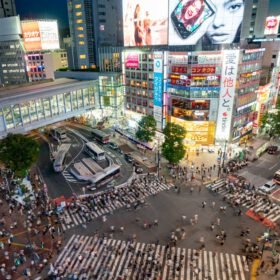
Tokyo is huge, and there’s so much to see that rushing around quickly becomes exhausting.
Give yourself time.
One day might be temples and traditional neighbourhoods.
Another might be shopping and quirky streets.
Another could be Disney.
And then there are the moments where you simply wander, stop for food and see where the day takes you.
Those slower days are often some of the best.
Is Universal Studios Japan Worth It?
Absolutely.
Especially if your children love Nintendo, Harry Potter or Minions.
Universal Studios Japan can easily become one of the highlights of a family trip to Japan.
Super Nintendo World in particular is something children are likely to remember long after you’ve returned home.
Just be prepared for a full day.
And comfortable shoes. Definitely the comfortable shoes.
Your Japan Planning Hub
By now you might have realised something about Japan.
There is simply too much to fit into one guide.
That’s why we’ve created our Japan series as a collection of destination guides rather than trying to squeeze everything into one enormous article.
If you’re planning your own family adventure, these guides are designed to work together.
Tokyo with Kids
Our guide to exploring Tokyo as a family, including the neighbourhoods, attractions and experiences worth adding to your itinerary.
Tokyo Disneyland
Everything you need to know about planning a Disney day in Tokyo with children.
Tokyo DisneySea
Our guide to the Disney park that feels unlike anywhere else in the world.
Kyoto with Kids
Temples, traditional streets, food and those beautiful moments when Kyoto feels like you’ve stepped into another world.
Osaka with Kids
A completely different side of Japan, with fantastic food, bright lights and plenty to keep children entertained.
Nara with Kids
A wonderful addition to a Japan itinerary, particularly if your children are excited about meeting the famous deer.
If you need help planning the trip, just click on the link and I will contact you https://www.travel-icious.com/hire-me-to-plan-your-trip/
So… Is Japan Worth It with Kids?
Absolutely.
But perhaps not for the reasons you might expect.
Japan isn’t necessarily the cheapest destination.
And it isn’t always the easiest destination.
But it is one of those rare places where almost every day feels completely different.
One morning you’re walking beneath thousands of red torii gates in Kyoto.
A few hours later you’re eating fresh mochi at a busy market.
The next day you’re racing through Super Nintendo World.
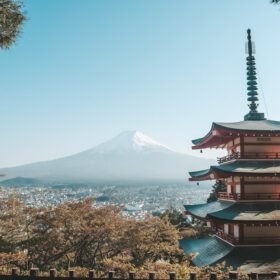
Then you’re looking out of the Shinkansen window and suddenly there’s Mount Fuji.
And somewhere in between all those big experiences, there are the small ones.
A vending machine that becomes your child’s favourite discovery.
A tiny ramen restaurant where nobody speaks much English but everyone is incredibly welcoming.
A convenience store breakfast eaten before an early train.
The excitement of finding the right platform.
A quiet temple courtyard.
A strange snack that the kids insist on trying.
Those are the moments that make a family trip feel like an adventure rather than simply a holiday.
And that’s what we love about Japan.
It somehow manages to balance everything.
Ancient traditions alongside futuristic cities.
Quiet temples alongside enormous theme parks.
Beautiful landscapes alongside neon-lit streets.
And moments of complete calm alongside the kind of excitement that leaves the whole family buzzing.
Japan also grows with your family.
Younger children might remember the bullet trains, vending machines and Disney magic.
Older kids and teenagers may fall completely in love with anime, shopping, Nintendo and Japanese street food.
And parents?
You’ll probably remember the kindness of the people, the incredible organisation, the beauty of the temples and the fact that, despite all those initial worries, travelling around Japan with children was actually much easier than you imagined.
Perhaps that’s the biggest compliment we can give Japan.
Because by the time you sit on that flight home, you might expect to feel relieved that you’ve finally managed to see everything on your list.
Instead, you’ll probably find yourself talking about what you didn’t get to see.
And then someone will say:
“When can we come back?”
We know that feeling.
So if Japan is sitting somewhere on your family’s travel wishlist, our advice is simple.
Go.
Give yourself time.
Three weeks if you can.
Don’t try to see everything.
Let yourself get slightly lost.
Eat things you’ve never tried before.
Take the train just for the fun of taking the train.
Stay in a ryokan.
Let the kids choose a vending-machine drink.
And leave a little room in your itinerary for the unexpected.
Because Japan isn’t a destination you simply tick off.
It’s a place you experience.
And somewhere along the way, without you even noticing it happening, Japan works its magic.
And you’ll probably start planning your next trip before you’ve even made it home.