
Thailand with Kids: Elephant Experiences – What to Look For
If there is one animal experience that seems to be on almost every family’s Thailand wishlist, it’s meeting elephants.
And I completely understand why.
They are enormous, beautiful and fascinating animals, and seeing one up close is something your children are unlikely to forget.
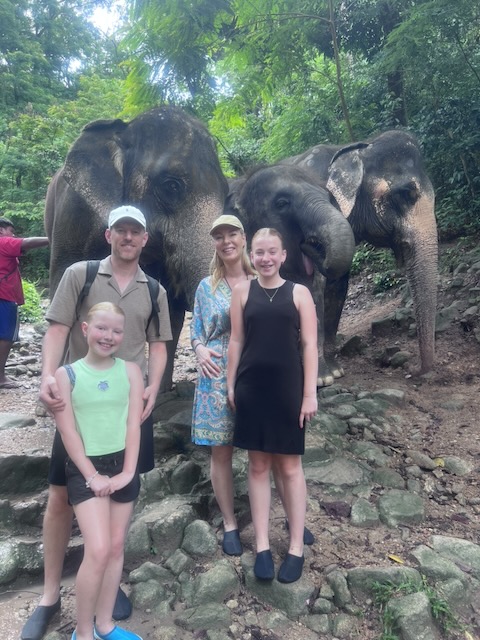
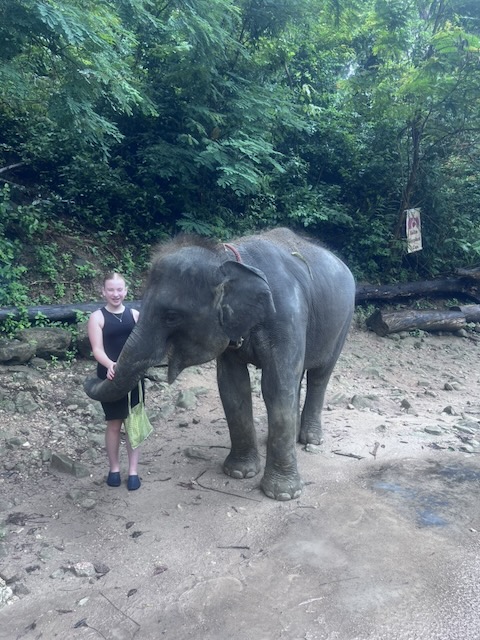
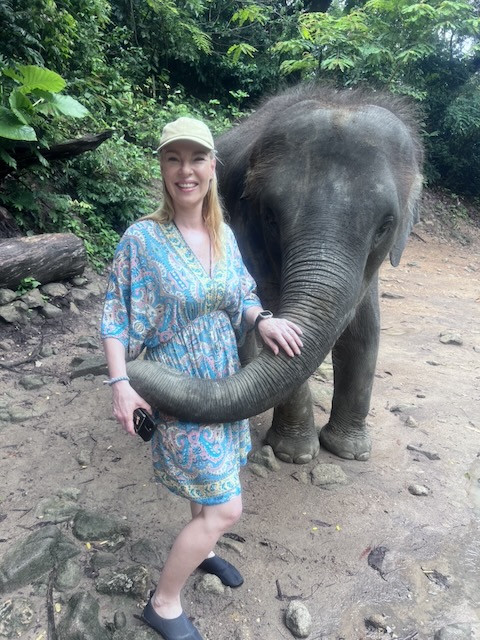
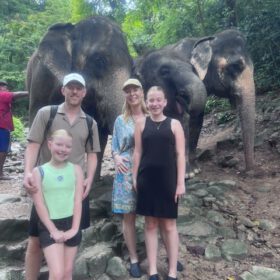
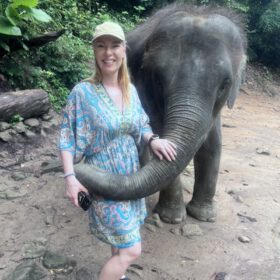
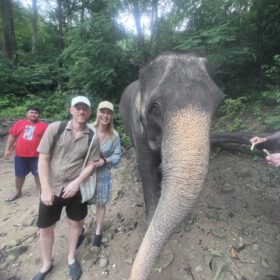
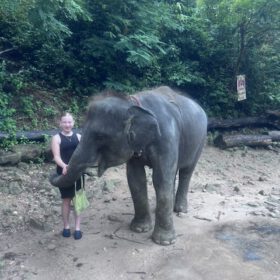
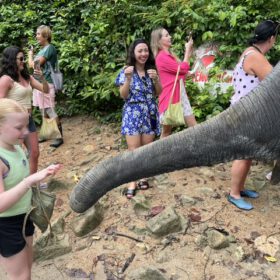
We’ve actually had two very different elephant experiences in Thailand. One in Chiang Mai and one in Phuket.
And honestly, experiencing both made us think much more carefully about what an elephant experience should actually look like.
Because the two experiences couldn’t have been more different.
Our Chiang Mai elephant experience
Our first experience was in Chiang Mai.
If you’re already thinking about adding Chiang Mai to your Thailand itinerary, I would definitely read our Chiang Mai elephant experience before booking anything. It gives you a much better idea of what our day actually looked like.
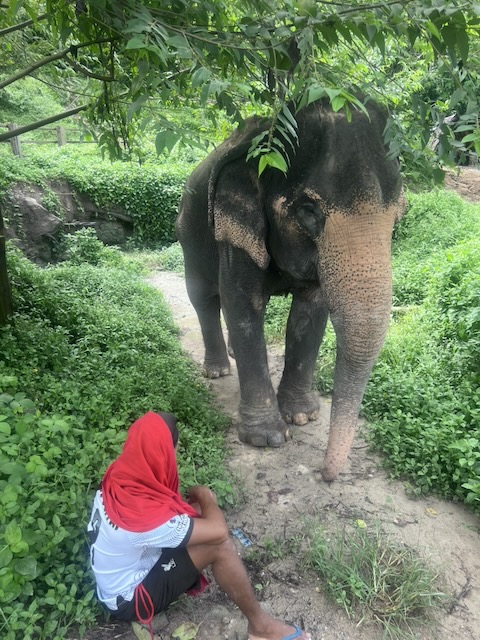
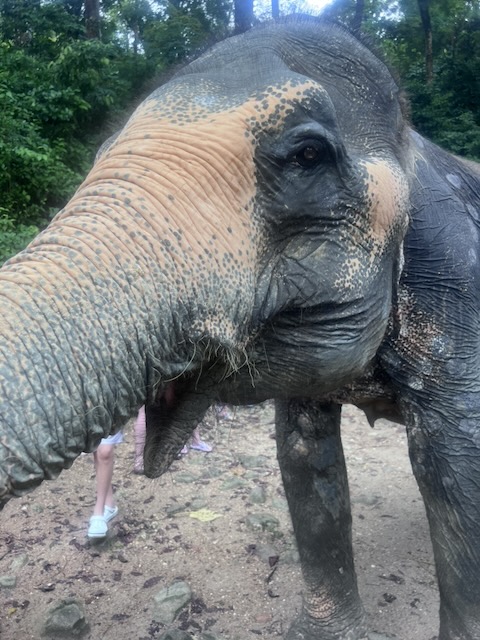
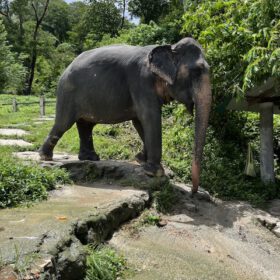
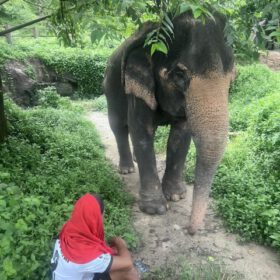
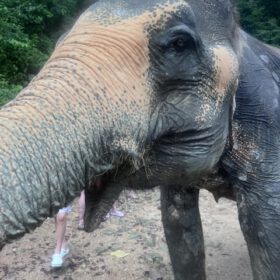
What struck us most was that the experience felt less like an attraction and more like we were being shown how elephants live.
There was a muddy water pool where the elephants could get in, roll around and cool themselves down.
And yes…
There was poo.
Quite a lot of it, actually.
When one of the elephants did its business in the muddy pool, the handler simply scooped it out.
Meanwhile, we were standing there watching.
It wasn’t polished.
It wasn’t particularly glamorous.
And it certainly wasn’t the kind of pristine elephant experience you might imagine from Instagram.
But somehow, that was exactly what made it feel more real.
The elephants were in the mud.
They were eating.
They were playing.
They were pooping.
They were being elephants.
And we were there to watch.
Then came Phuket…
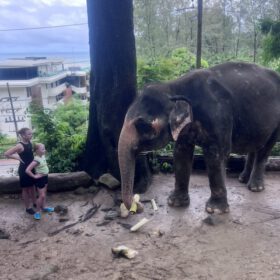
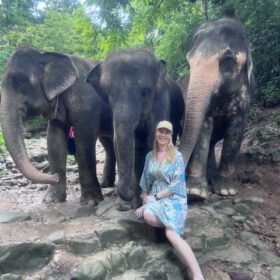
Our experience in Phuket was completely different.
You can read the full story in our Phuket elephant experience, but the biggest difference was immediately obvious.
The elephants were in a swimming pool.
A proper swimming pool.
And then there was the poo situation.
One of the things we remember most clearly is the handler holding a bucket against the elephant when it needed to go to the toilet.
The poo didn’t even touch the water.
From a practical point of view, I have to admit that was quite impressive.
But it also made us stop and think.
In Chiang Mai, the elephants seemed to be doing what elephants naturally do and we were standing in their environment.
In Phuket, everything felt much more controlled around the visitor experience.
The water was clean.
The elephants were in a swimming pool.
The handlers were managing what happened around them.
And that contrast stayed with us.
So which experience was better?
This is where I don’t want to give you a simple answer.
Because we were visitors.
We saw a few hours of each experience, not what happens behind the scenes every day.
So I wouldn’t claim that we can determine the overall welfare of the elephants based on our visits alone.
But the difference in the feel of the experiences was very clear.
Chiang Mai felt more like:
“Come and see how elephants live.”
Phuket felt more like:
“Come and have an elephant experience.”
And that distinction is actually really useful when you’re choosing one for your own family.
Look beyond the word “sanctuary”
This is probably the biggest thing I would tell families planning Thailand with kids.
Don’t book an elephant experience simply because the website says:
Sanctuary.
Or:
Rescue centre.
Or:
Ethical elephant experience.
Those words sound reassuring, but they don’t tell you exactly what happens during the day.
Instead, look at the activities.
Are you riding the elephants?
Bathing them?
Swimming with them?
Hugging them?
Feeding them?
Watching them?
And perhaps most importantly:
Can the elephant choose what it wants to do?
That’s the question I’d be asking.
Riding an elephant? Not for us.
This one is easy for us.
We wouldn’t choose an elephant ride.
And I think travelling with children actually gives you a great opportunity to talk about this.
We can see an elephant without sitting on it.
We can admire it without making it perform.
And we can have an amazing family memory without touching it.
The fact that something is a traditional tourist activity doesn’t automatically make it a good activity.
But what about bathing elephants?
This one is much less straightforward.
If you’ve been searching for elephant experiences in Thailand, you’ll probably have seen the photos.
Families standing in the water.
Elephants splashing around.
Children laughing.
It looks like an amazing day.
And I completely understand why people book it.
But the more you look into elephant tourism, the more you realise that simply replacing riding with bathing doesn’t automatically solve the welfare question.
If an elephant is brought into a pool because tourists are there, expected to stay there and interact with visitors, the experience is still being controlled around human entertainment.
And this is where our Chiang Mai experience really sticks in my mind.
There was a muddy pool.
The elephants used it.
They did what elephants do.
And yes, sometimes that meant someone had to scoop up poo.
It wasn’t designed to be Instagram-perfect.
It seemed much more about the elephants using the environment than about us getting the perfect interaction.
The best elephant experience might be less interactive
This is probably the hardest thing to accept when you’re travelling with kids.
Because children naturally want to get involved.
They want to feed the elephant.
Touch it.
Wash it.
Take a photo next to it.
And I get it.
But perhaps the best elephant experience isn’t the one where your child gets to touch the elephant.
Maybe it’s the one where they stand back and watch it behave naturally.
An elephant eating.
An elephant walking through the mud.
An elephant playing with another elephant.
An elephant spraying itself with water.
Or, quite simply, an elephant completely ignoring the tourists.
That might not sound as exciting on paper.
But it is probably a much better sign than an elephant constantly being directed towards visitors.
Think about the elephant, not just your family
When we’re planning family travel, we naturally think about what we want to get out of an experience.
Is it fun?
Is it worth the money?
Will the children enjoy it?
Will we get good photos?
But with wildlife experiences, I think we need to add another question:
Is this a good experience for the animal?
Can the elephant walk away?
Does it have space?
Can it spend time with other elephants?
Can it eat and forage?
Can it get muddy?
Can it decide whether it wants to be near people?
Those questions are more important than whether the experience promises an “up-close encounter.”
Where does an elephant experience fit into a Thailand family holiday?
For us, this is where Thailand is so much fun to plan.
You can build a trip around completely different experiences.
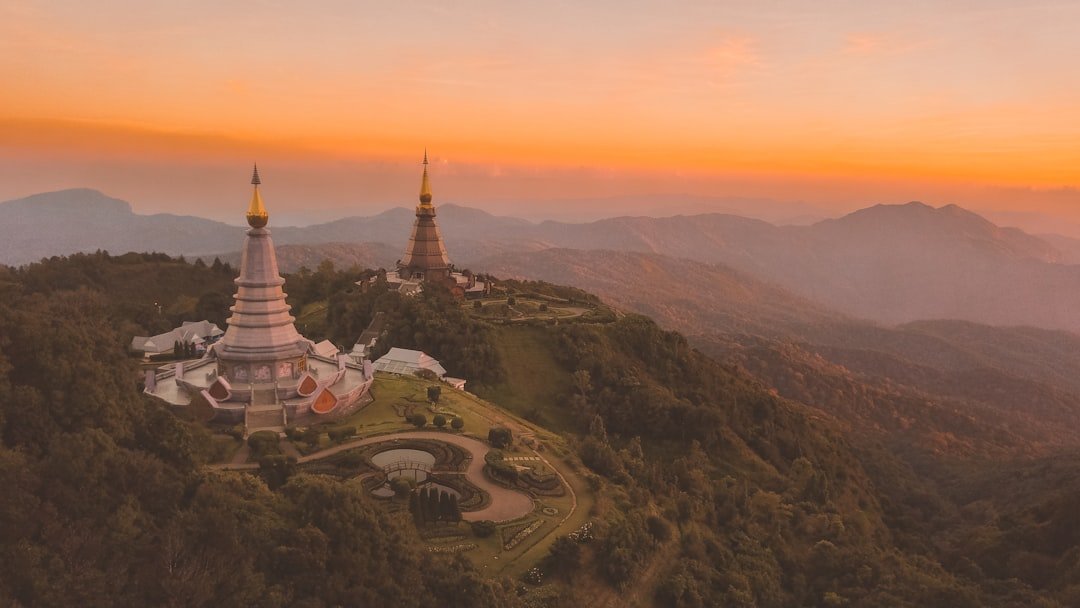
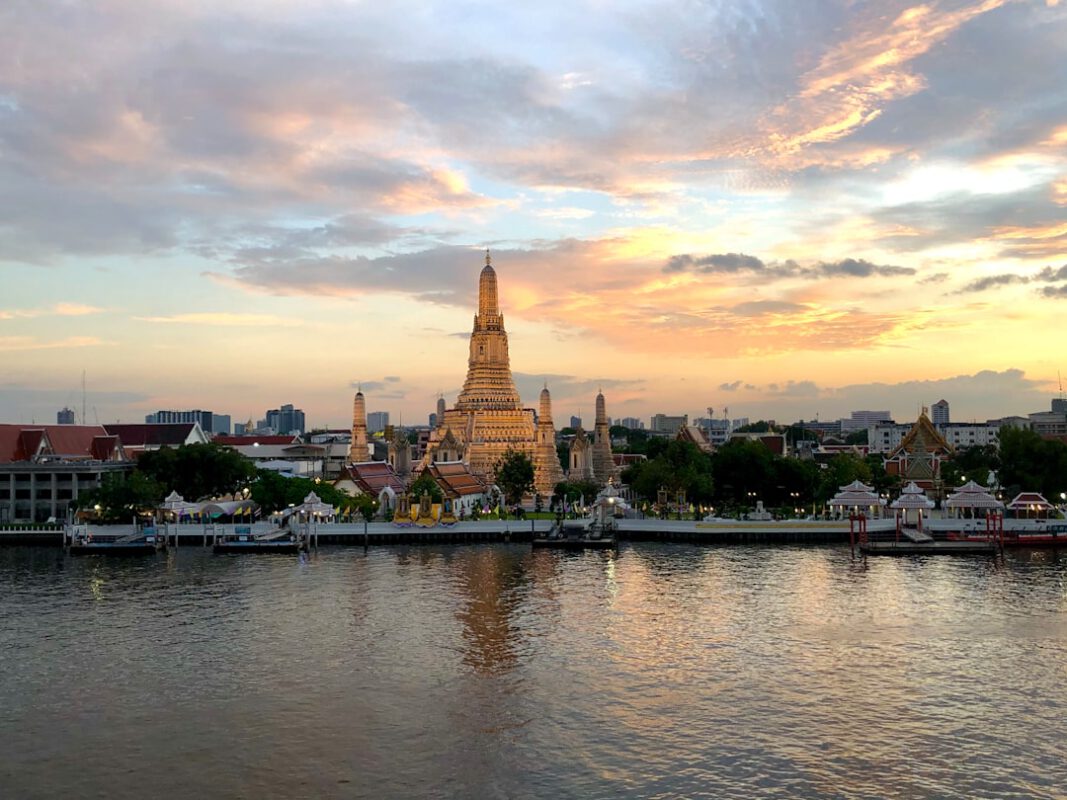
Maybe you start in Bangkok, head north to Chiang Mai and then make your way south for some island time.
Or perhaps your trip is mainly about beaches and you’re looking at Phuket and the surrounding islands.
If you’re still deciding between different islands, our Thailand Island Hopping with Kids guide is useful because not every island works equally well for a family holiday.
And if you’re combining several parts of Thailand, don’t underestimate how much time you’ll spend moving around. Flights, ferries, taxis and transfers can quickly become part of the adventure – which is why we put together our guide to Getting Around Thailand with Kids as well.
For an elephant experience, I’d especially consider the logistics.
You don’t want to spend half a day travelling to an experience that lasts a couple of hours simply because it had the best photographs online.
Sometimes the experience that fits naturally into your route is the better choice.
What should you look for when booking?
After our experiences in Chiang Mai and Phuket, these are the things I’d look at now.
- Read the actual programme
Don’t just read the headline.
Look at exactly what you’re going to do.
If it says:
“Feed, bathe and interact with elephants,”
I’d want to investigate further.
If it says:
“Observe elephants as they roam, eat and socialise,”
that tells you something very different.
- Look at the environment
Ask yourself whether the environment appears to be designed primarily for the elephants or for the tourists.
Is there space?
Can the elephants move away?
Are there lots of tourists surrounding them?
Is everything happening at a specific time because visitors are there?
These details matter.
- Don’t be seduced by the perfect photo
This is a big one.
A photo of a child hugging an elephant is probably going to get more clicks than a photo of an elephant quietly eating leaves twenty metres away.
But the second image might actually represent the better experience.
Don’t choose the elephant experience with the best Instagram feed.
Choose the one whose approach to the animals makes sense to you.
- Check current reviews
Experiences can change.
A place that was recommended five years ago may have changed its activities, ownership or approach.
So read recent reviews and look carefully at what visitors actually did.
Not just how many stars the place has.
What about the cost?
Elephant experiences can vary quite a bit in price.
And when you’re planning a family trip, that matters.
As we talk about in our Thailand with Kids: How Much Does a Family Trip Cost? guide, you don’t have to spend a fortune every day in Thailand.
We’d rather have a few experiences that we genuinely care about and balance them with cheap local meals, beach days and exploring on our own.
For an elephant experience, I’d be particularly wary of simply choosing the cheapest option.
If you’re paying for a smaller group, good facilities, experienced staff and appropriate care for the elephants, that may be money well spent.
When we’re comparing activities, we often use GetYourGuide, https://getyourguide.tpk.lu/OrKGbkZY to see what is available and compare the practical details. But for an elephant experience, we’d always do additional research into the actual operator before booking.
And yes, your kids might remember the poo
One of the funny things about travelling with children is that sometimes the thing you think will be the highlight isn’t what they remember at all.
You imagine they’ll come home talking about standing next to an enormous elephant.
Maybe they’ll remember the mud.
Maybe they’ll remember the elephant splashing water.
Or maybe, like ours, they’ll remember that one elephant went to the toilet and the handler had to scoop it up.
And honestly?
That’s fine.
Because real animal experiences aren’t always clean and polished.
Sometimes they’re muddy.
Sometimes they’re messy.
Sometimes they smell.
And sometimes an elephant poops in the pool.
That’s part of seeing an animal as an animal rather than as an attraction.
Would we do an elephant experience again?
Yes.
But after experiencing both Chiang Mai and Phuket, we’d be much more careful about what kind of experience we choose.
Our Chiang Mai experience made us feel like we were observing a little piece of elephant life.
Our Phuket experience showed us how differently the same type of experience can be organised around tourists.
Neither experience gives us enough information to declare one completely right and the other completely wrong.
But the contrast changed the questions we ask.
And I think that’s the most useful thing we can pass on to other families.
Don’t just ask:
“Can my kids get close to an elephant?”
Ask:
“What does the elephant get to do?”
If the answer is eat, walk, socialise, get muddy, swim and generally behave like an elephant, you’re probably looking in a much better direction than an experience where every moment is designed around what the tourist gets to do.
Because ultimately, we didn’t travel to Thailand to make elephants behave like tourists.
We went there to see elephants being elephants.
And that is the experience we’d choose again.